
RuneScape Dragonwilds Crafting Stations Guide
Dragonwilds divides production between specialist crafting benches and processing stations. Build around the recipe you need next: choose the bench that makes the item, add the processors that prepare its inputs, and place both near clearly organized storage.
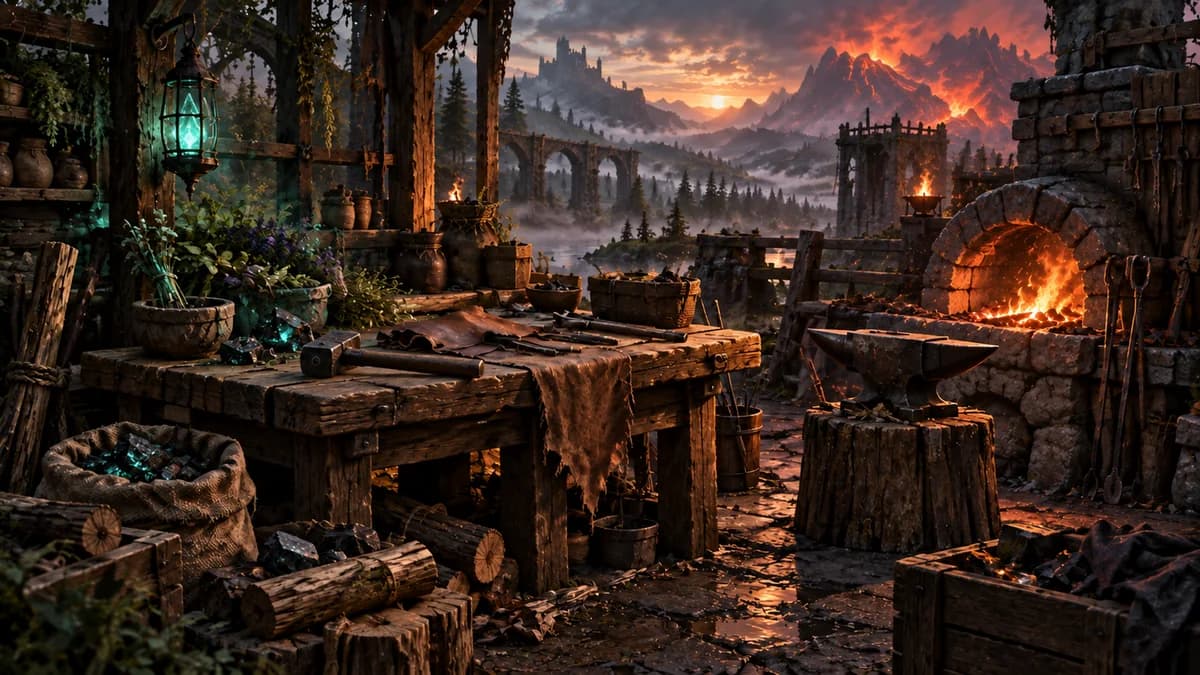
Quick answer
Key Takeaways
- The current equipment benches are the Blacksmith’s Bench, Fletching Bench, Armour Bench, and Mystic Forge.
- The Umbral Sands overhaul replaced the old Smithing Anvil and split its crowded equipment list across specialist benches.
- Processing stations remain essential because equipment benches consume refined bars, leather, cloth, powders, wax, and other components.
- Use the live build menu and recipe panel for exact unlocks and costs instead of an outdated early-access list.
All Crafting Stations Overview
| Crafting station | Primary use | Unlock or requirement | Important crafts | When you need it |
|---|---|---|---|---|
| Crafting Table | Early utility and general recipes | Available through early base progression; check the build menu | Basic tools, components, and utility recipes shown in game | At the first functional base |
| Blacksmith’s Bench | Metal tools, melee weapons, shields, crossbow limbs, and quest items | Added in the Umbral Sands crafting overhaul; live build menu shows current materials | Tools and one- or two-handed melee equipment | When metal equipment becomes part of the active progression path |
| Fletching Bench | Ranged weapon production | Rebuilt in the Umbral Sands overhaul | Shortbows, longbows, crossbows, arrows, and bolts | When maintaining a ranged loadout or its ammunition |
| Armour Bench | Armor for all three combat styles | Added in the Umbral Sands crafting overhaul | Head, body, leg, and cape-slot equipment shown by current recipes | When replacing or completing melee, ranged, or magic armor |
| Mystic Forge | Magic weapons and advanced weapon systems | Added in Umbral Sands; advanced uses depend on progression and eligible items | Staves, selected capes, Vestiges, and Ascension Core upgrades | For magic gear and documented late-game weapon upgrades |
| Rune Altar | Runic production | Follow the current skill and recipe requirements | Runes used by spells and related progression | When magic or utility spells need a dependable rune supply |
| Cooking Range and cooking stations | Food preparation | Build as current recipes and base needs require | Meals and expedition supplies shown in game | Before travel and combat begin consuming food regularly |
| Furnace and advanced metal processors | Turn ores and related inputs into usable metal components | Processor availability follows materials and progression | Bars and other metal inputs required by live recipes | Before a metal bench can use newly gathered ore |
| Tannery and Advanced Tannery | Process hides into leather materials | Advanced Tannery is associated with later progression | Leather inputs; Black Dragon Hide is processed at the Advanced Tannery | For armor and components that specify processed hides |
| Spinning Wheel, Advanced Spinning Wheel, and Loom | Turn fibres and related inputs into thread or cloth | Advanced Spinning Wheel was added for Scorned production | Thread, cloth, Vis Fibers, and Vis Cloth chains | For ranged, magic, armor, and late-game textile recipes |
| Kiln, Grindstone, Sawmill, and Brewing Cauldron | Specialized material processing | Build only when a current recipe names their outputs | Harmonised Compound, Runic Powder, ground dragon tooth, planks, Draconic Vis Wax, and other listed outputs | When regional recipes make their processing chain relevant |
The Four Specialist Equipment Benches
Blacksmith’s Bench
Jagex assigns tools, one-handed and two-handed weapons, shields, crossbow limbs, and certain quest items to the Blacksmith’s Bench. Build it when the active equipment or gathering path calls for metalwork, then keep refined metal inputs nearby.
Fletching Bench
The Fletching Bench covers shortbows, longbows, crossbows, arrows, bolts, and other ranged items. Its value depends on a sustainable supply of both the weapon materials and the ammunition the chosen ranged loadout consumes.
Armour Bench
The Armour Bench holds head, body, leg, and cape-slot equipment across melee, ranged, and magic styles. This centralizes armor crafting, but the required bars, leather, cloth, and special components still come from different processors.
Mystic Forge
The Mystic Forge supports magical weapons, selected capes, Vestige equipment, and the Ascension Core upgrade system. Jagex states that eligible Masterwork and Vestige weapons can be upgraded there; verify eligibility and the current core requirement in the live interface.
Crafting Stations and Production Chains
A crafting bench is normally the final link, not the whole recipe. Ore must become the metal component named by the item; hides must be tanned; fibres may need spinning and weaving; wood may need sawing; and magical or Scorned materials can pass through the kiln, grindstone, brewing, or advanced textile stations before reaching equipment production.
Organize the workshop around those flows. Keep raw inputs beside the first processor, finished components beside the bench that consumes them, and completed equipment in separate storage. This makes missing materials visible and reduces accidental use of components reserved for another player or recipe.
For late-game examples, the 1.0 notes explicitly connect Black Dragon Hide to the Advanced Tannery, Runic Powder and ground dragon tooth to the Grindstone, Harmonised Compound to the Kiln, Vis Fibers to the Advanced Spinning Wheel, Draconic Vis Wax to the Brewing Cauldron, and Vis Cloth to the Loom. Exact item quantities remain intentionally omitted here.
Best Crafting Stations to Build First
- Build the early general station and storage needed to turn nearby materials into basic tools and supplies.
- Add food and survival processing before long expeditions make recovery the main bottleneck.
- Choose the specialist bench for the active combat or tool path instead of building every equipment bench at once.
- Add only the processors required by that bench’s visible recipes, keeping their storage close together.
- Expand into the other equipment styles when skills, regional materials, co-op roles, or current objectives justify them.
- Reserve advanced stations for the stage where their inputs are obtainable and their outputs have a confirmed use.
Crafting Station Progression
Progress stations in step with regions and equipment. Early bases need common production and one reliable gear chain. Fellhollow and Dowdun Reach make Steel- and Mithril-era paths relevant; Umbral Sands adds Adamant, Red Dragonhide, Infinity, Yew, Vestiges, and the specialist-bench overhaul; Scorned Wilderness adds Rune, Black Dragonhide, Ancestral, advanced textile work, and new material processors.
A station appearing in the build menu does not mean it is the best immediate investment. Confirm that its input materials are accessible, that a desired recipe is visible, and that its output advances a current objective. Otherwise, storage, food production, or an existing processor may create more progress for fewer resources.
Crafting Station Tips
- Treat the current in-game build menu and recipe panel as authoritative after patches.
- Do not use old guides that still place all metal weapons and armor on the removed Smithing Anvil.
- Leave expansion space around processors without constructing advanced stations before they have a job.
- Separate raw materials, processed components, and completed gear so recipe shortages are easy to diagnose.
- In multiplayer, label or consistently place shared storage before several players queue competing recipes.
- Check the complete chain before spending rare materials; a final bench cannot compensate for a missing processor.
Keep exploring
Related Guides
First-party references